
The Pricing Mistake That Costs Homeowners the Most
Home Selling Arielle Dixon March 20, 2026
Home Selling Arielle Dixon March 20, 2026
I would love to tell all of my clients that their home is worth some incredible, record-breaking number.
But the truth is, a home is only worth what someone is willing to pay for it.
That is where real estate shifts from emotion to strategy.
Sellers naturally have a deep connection to their home. It holds memories, milestones, and meaning. But the market does not share that same perspective. It responds to buyer demand, condition, competition, and pricing strategy.
One of the most common mistakes I see is overpricing a home with the idea of leaving room to negotiate. On the surface, it sounds strategic. In reality, it often does the opposite.
When a home is priced too high, buyers hesitate. And in a competitive Bay Area real estate market, hesitation is everything.
They begin to question it. Why is it priced above comparable homes? What am I missing? Is this going to be more work than it is worth?
It is similar to a front door where the key does not turn smoothly.
That key jiggle is something your family may have lived with for years. It becomes part of the character of the house. But to a new buyer, it raises questions. If they have to work just to get in, they start to wonder what else might be off.
That small moment of friction shifts perception. And perception is what drives offers.
This is not about greed. Every homeowner wants to maximize their return. It is often their largest financial asset. But pricing decisions are sometimes influenced by a neighbor’s standout sale, an online estimate that lacks context, or the one agent willing to promise the highest number.
There is also emotion involved. And that is understandable.
What is important to recognize is that real estate is not one-size-fits-all. The right pricing strategy depends on the property, the condition, the competition, and the timing of the market. Pricing a home in a competitive market requires alignment, not guesswork.
When a home enters the market above where it should be, it does not create excitement. It creates distance.
The home sits. Days on market increase. Showings slow. Buyers become more critical. Even after a price adjustment, the perception has already shifted.
Now the conversation changes. Why has it not sold? Is something wrong with it?
What started as an attempt to aim higher often turns into a more difficult path. In many cases, sellers end up accepting less than they would have if they had priced correctly from the beginning. At the same time, they are living in a constant state of being show-ready, waiting for momentum that never fully builds.
One of the most overlooked parts of this process is buyer psychology.
Two buyers can walk into the same home and walk away with completely different opinions. I recently had a listing where one buyer loved a unique feature of the property and saw it as added value. Another buyer saw that same feature as something they did not want to maintain.
The buyer who saw the value wrote the winning offer.
That is the reality of real estate in markets like Palo Alto and the greater Bay Area. Pricing is not just about the property itself. It is about how the right buyer perceives it and whether the home is positioned in a way that compels them to act.
When I advise my clients, I am not just choosing a number. I am building a strategy.
That strategy is informed by recent comparable sales, current buyer demand, the condition of the home relative to competing inventory, micro-location details, and most importantly, how buyers are behaving in that moment.
The goal is not simply to list a home.
The goal is to attain the highest and best result the marketplace will provide while supporting the seller’s next chapter.
There is a common belief that pricing higher creates an advantage. In most cases, it creates delay, doubt, and missed opportunity.
The market does not respond to aspiration. It responds to positioning.
Pricing is not about pushing a number. You get the best result by positioning it correctly.
If you are thinking about selling, pricing is not just a number. It is a strategy that deserves a real conversation.
Because the difference between guessing and positioning correctly is not small. It is often the difference between a home that sits, a home that sells, and the result you ultimately walk away with.
Stay up to date on the latest real estate trends.

Real Estate Scam Watch
Scammers can copy names, photos, license numbers, and listings. In the age of AI, verifying identity matters more than ever.

Real Estate Scam Watch
Cash buyers can provide real solutions, but homeowners deserve to understand the value of their property and exactly what they’re trading before saying yes.

Real Estate Scam Watch
Foreclosure distress creates urgency, and scammers know it. One homeowner’s experience shows why verification and understanding your options matter.

Real Estate Scam Watch
Seller impersonation and vacant-land fraud are real threats, especially for absentee owners. Here’s how California property owners can stay alert.

Real Estate Scam Watch
One convincing email can redirect thousands of dollars. Here’s what every buyer and seller should verify before sending a wire.

Home Selling
A 1031 exchange can be a powerful wealth-building tool, but timing, strategy, and the right team matter long before closing day.

Real Estate Scam Watch
From suspicious offers to sophisticated impersonation schemes, knowing what to watch for can help protect your property, your equity, and your peace of mind.
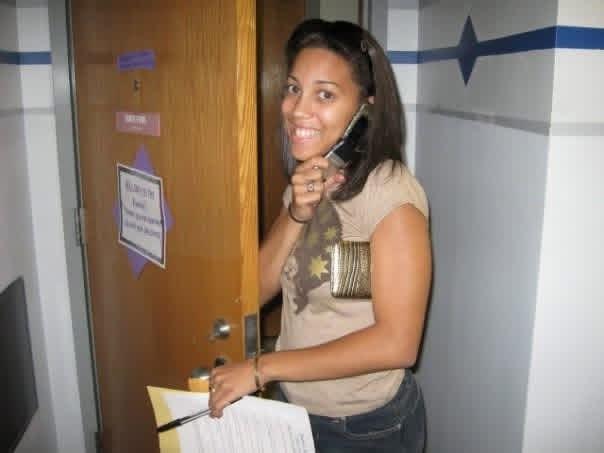
College move-in is about more than unloading boxes. It is a student’s first step into independence and a new chapter for the entire family.

Real Estate Insights
Reflections on growth, accountability, and the lessons that stay with us long after we leave
Arielle understands that buying or selling a home is an important decision that's about so much more than just the price tag, and she is fully committed to helping you achieve your real estate dreams, whatever they may be.